The long game
Tests can have two innings per side and are usually scheduled over five days. Time, wickets and conditions all shape the result; a match can be drawn.
Explore scorecards →
A practical A–Z guide to runs, wickets, overs, fielding and reading a scorecard—with clear diagrams and a simple route into the game.
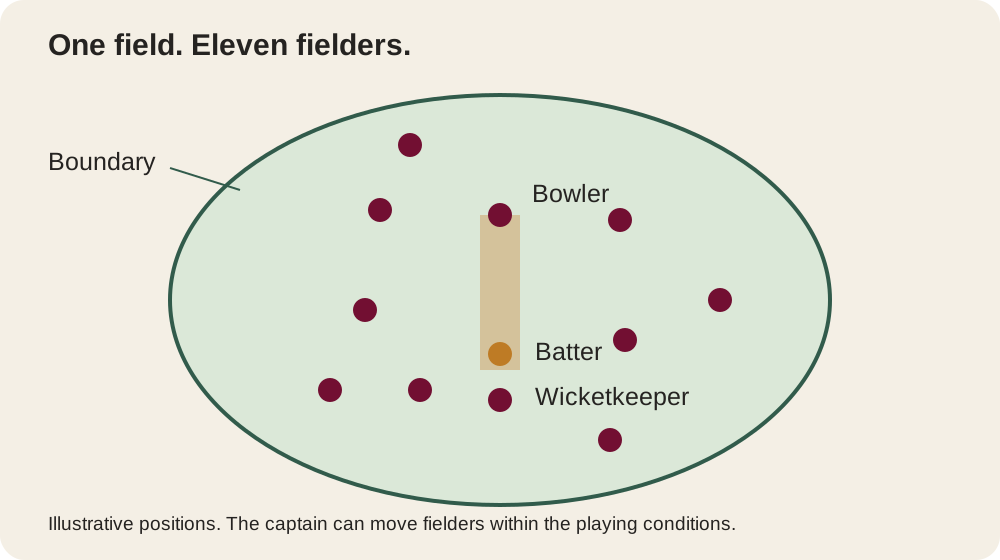
One side bats to score runs. The other bowls and fields to take wickets and keep the score down. Two batters are on the field at a time, while the fielding side normally has eleven players.
The format sets the shape of the contest. In a limited-overs match, each side usually has one innings and a fixed number of overs. Multi-day cricket gives the teams more time and can end in a draw.
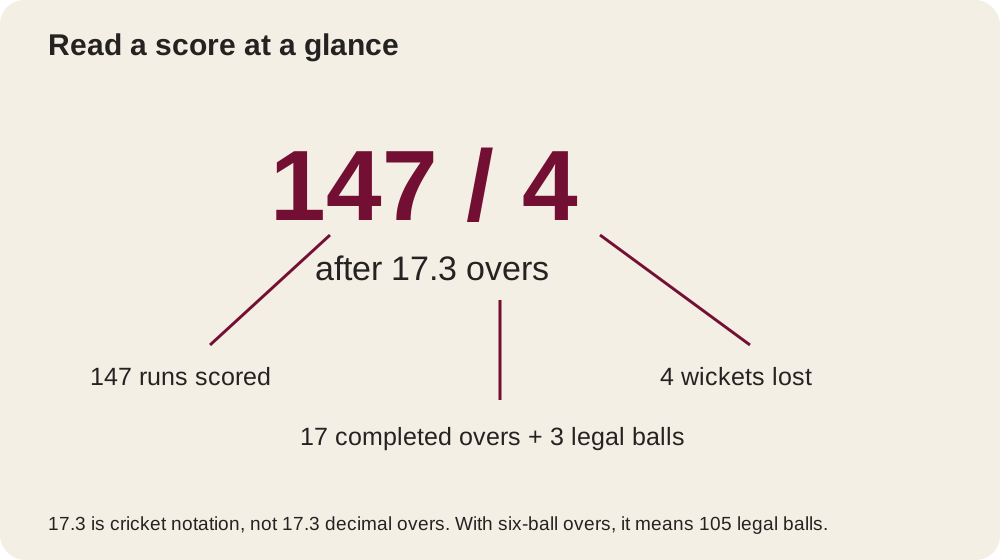
Start by following three things: the runs scored, the wickets lost and the balls remaining. Those numbers tell you what each team needs next.
If the first team makes 146, the chasing team normally needs 147 to win. If time or overs run out before the result is decided, the format and playing conditions determine what happens next. Rain-affected targets can be revised.
Batting tables show each player’s runs and balls faced. Bowling tables show overs, runs conceded and wickets. The team total includes extras, so it may be larger than the sum of the batters’ runs.
Tests can have two innings per side and are usually scheduled over five days. Time, wickets and conditions all shape the result; a match can be drawn.
Explore scorecards →One Day Internationals normally give each team one innings of up to 50 overs. The men’s ODI World Cup uses this format.
Explore scorecards →T20 normally gives each side up to 20 overs. The shorter innings makes each ball especially valuable. International matches are often labelled T20I or IT20.
Explore scorecards →The scorebook also uses MDM for multi-day domestic matches and ODM for one-day domestic matches. Individual competitions can have different playing conditions.
Use this glossary to follow the conversation and understand what is happening on the field.
The fielding side asks the umpire to decide whether a batter is out. A raised finger is the familiar signal for an out decision; the precise dismissal must satisfy the relevant law.
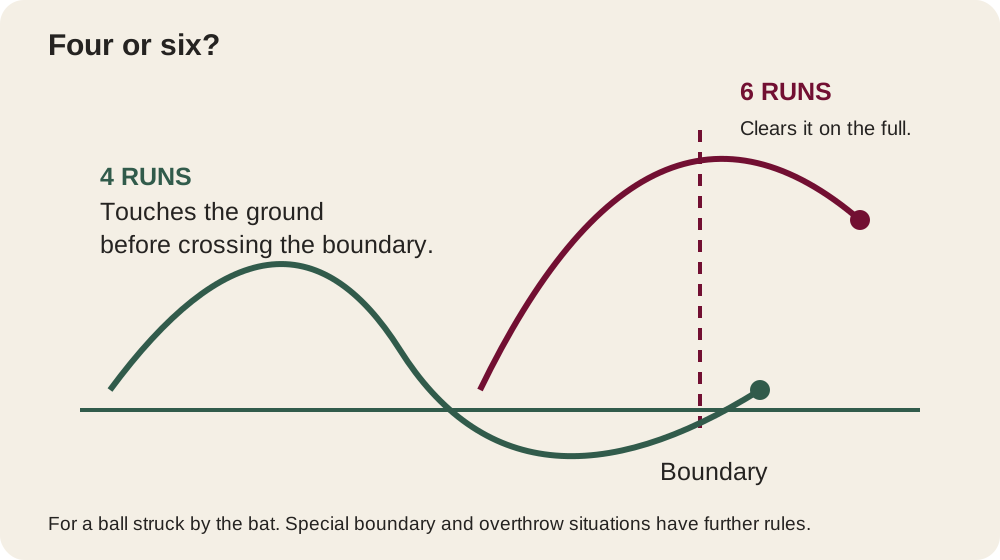
The edge of the playing area. A struck ball normally earns four if it touches the ground before reaching the boundary, or six if it crosses on the full.
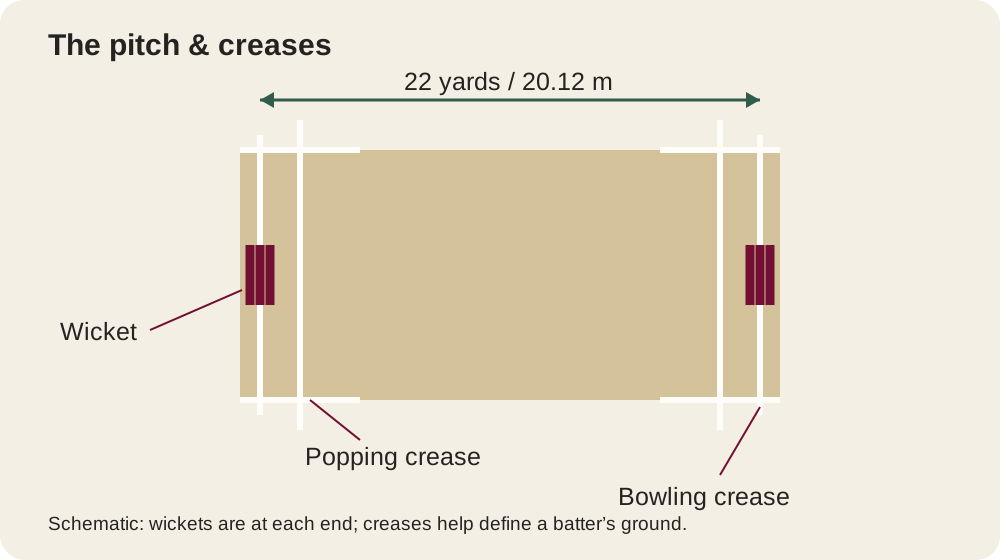
A marked line near the wickets. The popping crease helps define a batter’s ground and is also used when judging a bowler’s delivery. Grounding a bat or body correctly matters when running.
An event that ends a batter’s innings. Bowled, caught, LBW, run out and stumped are common examples. The conditions for each dismissal differ, especially after a no-ball or wide.
Runs added to the team total without being credited to a batter. The main categories are wides, no-balls, byes, leg byes and penalty runs. They explain why team runs can exceed the sum of individual batting scores.
The bowling side’s work of catching, stopping and returning the ball. Fielders help prevent runs and create wickets. Their positions change with the batter, bowler, match situation and competition rules.
The venue where a match is played. The field surrounds the central pitch; its boundary is marked before play. Ground size and shape vary, so a diagram is a guide rather than a universal field plan.
A batter may play right-handed or left-handed. Off side and leg side are described relative to that stance. Fielding descriptions therefore need the batter’s handedness to make sense.
A team’s turn to bat, or an individual batter’s time at the crease. Limited-overs games normally give each team one innings; multi-day cricket can give each side two.
The batters decide whether there is time to reach the opposite ends. Call clearly, watch the ball and your partner, and make good your ground. A run can be lost if it is run short.
The wicketkeeper fields behind the striker’s wicket. The keeper receives balls that pass the batter and can contribute catches, stumpings and run outs, subject to the laws.
Leg before wicket is a dismissal involving a ball intercepted by the batter’s body. It is not simply any ball hitting a pad: pitching, impact, the attempted stroke and the projected path all matter.
A bowling over from which no runs are charged to the bowler. Read the scorecard carefully: byes and leg byes are team extras, rather than runs conceded by that bowler.
An illegal delivery called by an umpire. It adds a penalty run, does not count as a legal ball in the over, and restricts the ways a batter can be dismissed. Free-hit rules depend on the playing conditions.
A set of six legal deliveries in the standard modern game. Wides and no-balls require additional deliveries. After a completed over, bowling changes ends and another bowler delivers the next over.
The central strip between the wickets, 22 yards or 20.12 metres long. The bowler delivers from one end towards the striker at the other; the batters run between the two ends.
One run taken by moving promptly between the wickets. Calling and coordination are as important as speed. Practise with a partner before trying to judge tight runs in a match.
A dismissal that can occur when a wicket is fairly broken while a batter is out of their ground. Know which end is threatened and ground the bat beyond the crease rather than jumping across it.
The striker is the batter facing the next delivery; the partner is the non-striker. An odd number of completed runs usually swaps their ends. The change of bowling end after an over also affects who faces.
The captains’ pre-match coin toss decides which captain chooses whether to bat or field first. Conditions, team strengths and the format can influence that choice.
An official who manages play and makes decisions under the laws and playing conditions. On-field umpires communicate with scorers through signals. Some competitions also appoint TV and reserve umpires.
In a completed limited-overs chase, passing the opponent’s total wins the match. A side defending a total wins by runs; a successful chasing side normally wins by wickets remaining. Ties and interrupted games have additional rules.
A delivery judged beyond the striker’s reach under the applicable rules. It adds an extra and does not count as a legal delivery in the over. The interpretation varies with the format’s playing conditions.
The Roman numeral for eleven, often used for a cricket team. With two batters needed to continue a normal innings, ten wickets usually leave the final batter without a partner.
A delivery pitched very close to the batter’s feet or the base of the stumps. It describes the ball’s length, rather than a separate scoring rule or a special type of dismissal.
A batter dismissed without scoring has made a duck. Being not out on zero is different: no dismissal has occurred. Scorecards distinguish runs from whether the batter’s innings has ended.
Your team bats to build a score, then bowls and fields to limit the other side. Learn the match format before starting.
Identify both wickets, the popping creases and the boundary. Understand where to stand and how to make good your ground.
Use suitable practice equipment and a partner. Begin with controlled throws, straight batting and clear calls for a run.
Count six legal balls. Record wides and no-balls separately so the bowler completes the required legal deliveries.
Rotate batting, bowling, keeping and fielding. A short practice game helps everyone understand the different jobs.
Write down runs, extras, wickets and completed overs. Check the total together at the end of each over.
Open a scorecard, identify the target and compare the batting and bowling tables. Watch how the situation changes over by over.
This is a beginner’s guide, rather than the complete law book. MCC maintains the Laws of Cricket, while competitions apply their own playing conditions.
Illustrations by CricMania. Diagrams are schematic and are not to scale.